

A Practical Guide to Solving Green, Brown, Cloudy, and Foamy Pond Water
Clear pond water doesn’t happen by accident. It’s the result of balanced biology, proper filtration, and understanding what your pond is trying to tell you. When water turns green, brown, milky, or starts foaming, it’s a sign that something in the ecosystem is out of balance.
Let’s break down the most common pond water problems, what causes them, and how to fix and prevent them.
Green Water
What causes it
Green water is caused by free-floating microscopic algae suspended in the water column. These algae thrive when three things are present:
- Excess nutrients (from fish waste, decaying leaves, or leftover food etc.)
- Plenty of sunlight
- Warm water temperatures
The result is water that looks like pea soup, sometimes almost opaque.
How to fix it
- Reduce nutrients: Hoover the pond to remove debris, avoid overfeeding fish, and don’t overload the pond with fish.
- Add shade: Floating plants like water lilies or marginal plants reduce sunlight penetration. Man made structures such as pergolas offer great shade to a pond.
- Increase oxygen levels: Adding an air pump, preferably a little oversized to your pond will help tackle green water as it encourages aerobic bacteria growth which break down organic sludge, debris and fish waste.
- UVC clarifier: This is one of the most effective tools for clearing green water quickly as it directly kills the algae as it goes across the lamp.
How to prevent it
Consistent maintenance, balanced stocking levels and appropriate feeding are all key. Once algae get the upper hand, it’s hard to stop—but easy to prevent.
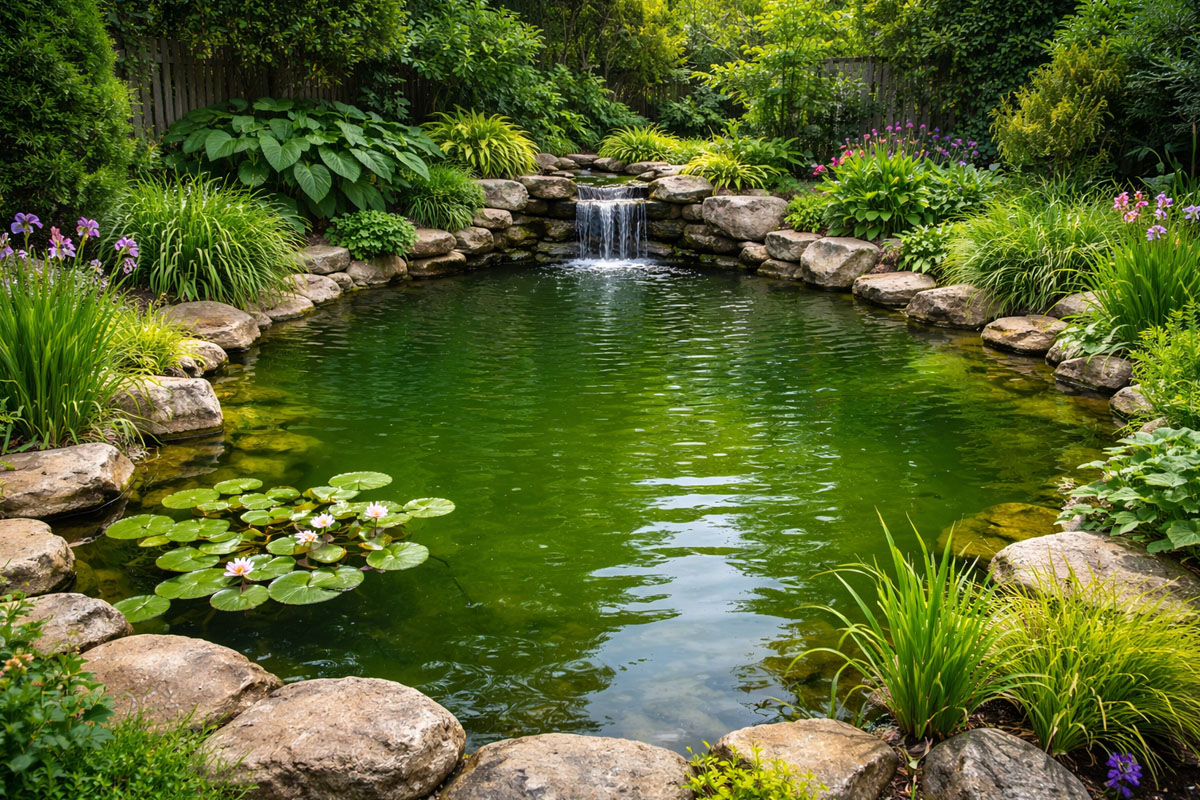
Before
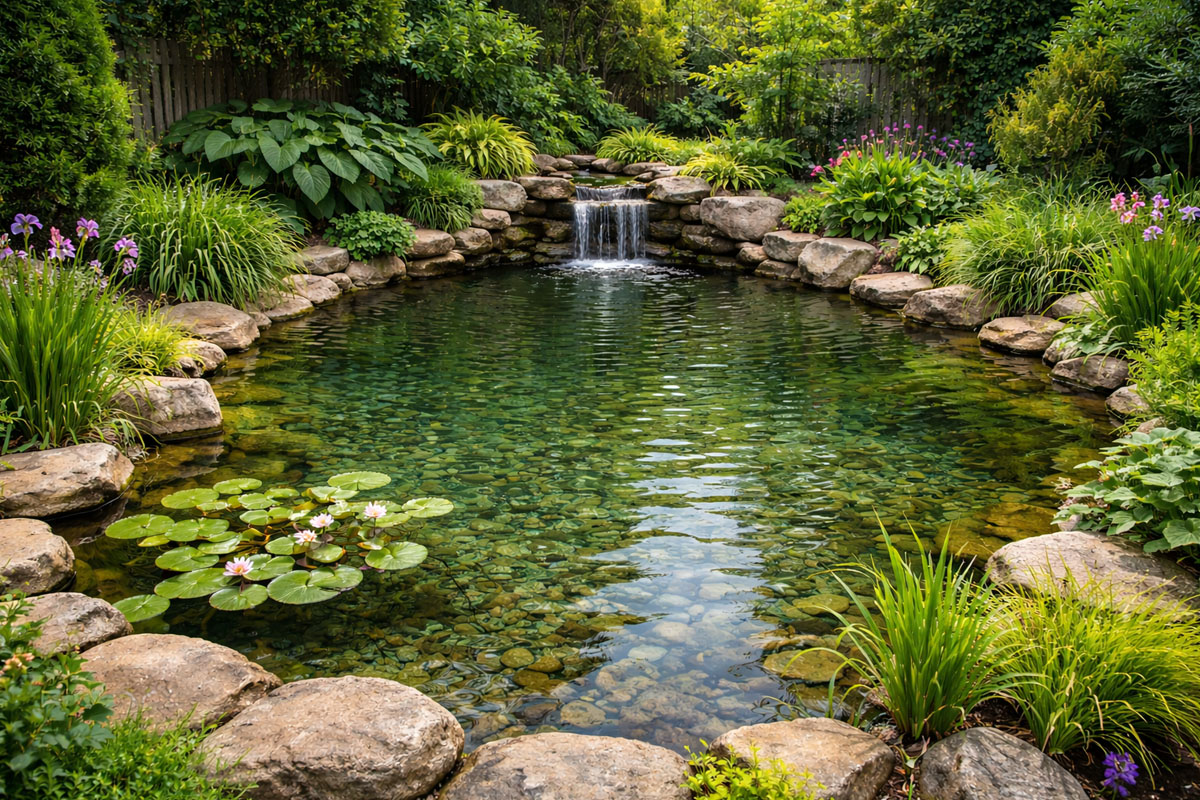
After
Brown Water
What causes it
Brown water is usually caused by suspended particles rather than algae. Common culprits include:
- Soil runoff after rain
- Decaying organic matter like leaves and mulch at the bottom
- Inadequate filtration
- Overstocking and overfeeding of fish
How to fix it
- Adequate mechanical filtration: Ensure your filter is capable of filtering a pond of your size with the number of fish you stock. And make sure regular maintenance is carried out to this. Filter pads or settling chambers are good for trapping fine particles.
- Hoover the silt: Using a pond vacuum you can hoover the silt and sludge build up from the bottom of the pond. Or in bad cases a full clean out may be needed.
- Reduce feeding: Fish waste is a contributing factor to the problem. Assess how much you are feeding the fish and whether or not it can be reduced. The more goes in them, the more comes out the other end.
How to prevent it
Regular spot cleans with a pond hoover or silt net. Net out leaves that have fallen in the pond before they sink to the bottom, maybe consider a pond cover net to catch the leaves. Ensure your filter is correctly sized for your pond.
White or Milky Cloudy Pond Water
What causes it
White or grey cloudiness is often due to a bacterial bloom, especially in:
- New ponds
- Ponds after filter cleaning
- Systems with unstable biological filtration
- A large volume of organic matter breaking down simultaneously, for example excessive overfeeding resulting in uneaten food.
It can also come from fine clay particles or sudden changes in water chemistry.
How to fix it
- Be patient: Bacterial blooms often clear on their own as the ecosystem stabilises.
- Avoid overcleaning filters: This removes beneficial bacteria.
- Add beneficial bacteria: Helps speed up biological balance.
- Check aeration: Oxygen supports healthy bacteria and fish.
- Carry out a partial water change: A bacteria bloom is often linked to a high concentration of ammonia present in the water, this ammonia heavily affects the fish’s health and ability to breath properly through their gills. A partial water change will help dilute this ammonia giving the fish a lifeline. Make sure to use a dechlorinator for the new tap water being added.
How to prevent it
A mature biological filter is the most important thing. Aside from that feed the fish appropriately and net out any food left uneaten after a few minutes. When carrying out filter cleans it’s a good idea to add some live beneficial bacteria into the filter in the forms of off the shelf products from fish stores.
Foam
What causes it
Foam is usually a sign of dissolved organic compounds in the water. These come from:
- Fish spawning activities: Protein-rich fluids released during spawning, combined with thrashing water, create foam, especially in spring.
- Chemical/detergent runoff containing soaps or detergents can affect
- Excessive proteins in the water, common sources being food rich in protein along with the breakdown of leaves, debris, fish waste, and uneaten food releases proteins into the water.
- Waterfalls, fountains, and air stones mix air with these dissolved proteins, creating bubbles that form foam.
- Poor water circulation
Light foam that disappears quickly is normal. Thick, persistent foam is not.
How to fix it
- Partial water changes: Dilutes excess organics and removes the top “layer” of water where excessive proteins reside.
- Improve circulation: Stagnant water allows proteins to accumulate.
- Reduce organic waste: Skim debris and trim dying plants.
- Pond Skimmer: A pond skimmer can help draw the foam into one specific area and keep it trapped. Although in bad cases of pond foam more foam will continue to form so this can sometimes just be a “plaster on a bullet wound” approach.
- Anti-foam products: Off the shelf anti-foam products that come in liquid form often see good results but can be an expensive ongoing cost especially when in reality the cause of the problem should be addressed.
How to prevent it
Good filtration, proper feeding habits, periodic partial water changes and routine cleanup keep foam from forming in the first place.
The Big Picture: Balance Is Everything
Clear pond water isn’t about chasing problems—it’s about maintaining balance:
- Don’t overstock fish
- Feed appropriately
- Choose adequate filtration and maintain them regularly
- Carry out regular maintenance including removing debris before it breaks down
- Encourage beneficial bacteria
Don’t think of it as fish keeping, think of it as water keeping. Aim to keep the water healthy and the fish’s health will follow.
