
Ask Dan the Pond Man
Hi, I’m Dan from LilyPad Pond Services, your local pond and fish care specialist covering Kent.
If you’ve got a question about your pond, chances are I’ve seen it, fixed it, cleaned it, or helped the fish through it. From green water and leaking liners to filter upgrades, full pond clean-outs, and ongoing maintenance, Ask Dan is all about keeping ponds healthy, clear, and stress-free for both you and your fish.
Ask your question using the form below.
We are here to help to keep your pond healthy and wet pets happy!
Straight answers, expert care, and ponds done properly.
I work with all types of ponds – wildlife ponds, koi ponds, and everything in between – offering honest advice and practical solutions tailored to your setup. Fish health and welfare always come first, and I’m happy to explain what’s going on and why, without the jargon.
So if you’re in Kent and need help with:
- Pond maintenance and care
- Pond relines and repairs
- Filter installs and upgrades
- Full pond clean-outs
- Fish care and seasonal advice
…you’re in the right place.
Ask Dan – The Pond Man.
Some of the previous questions answered on pond maintenance
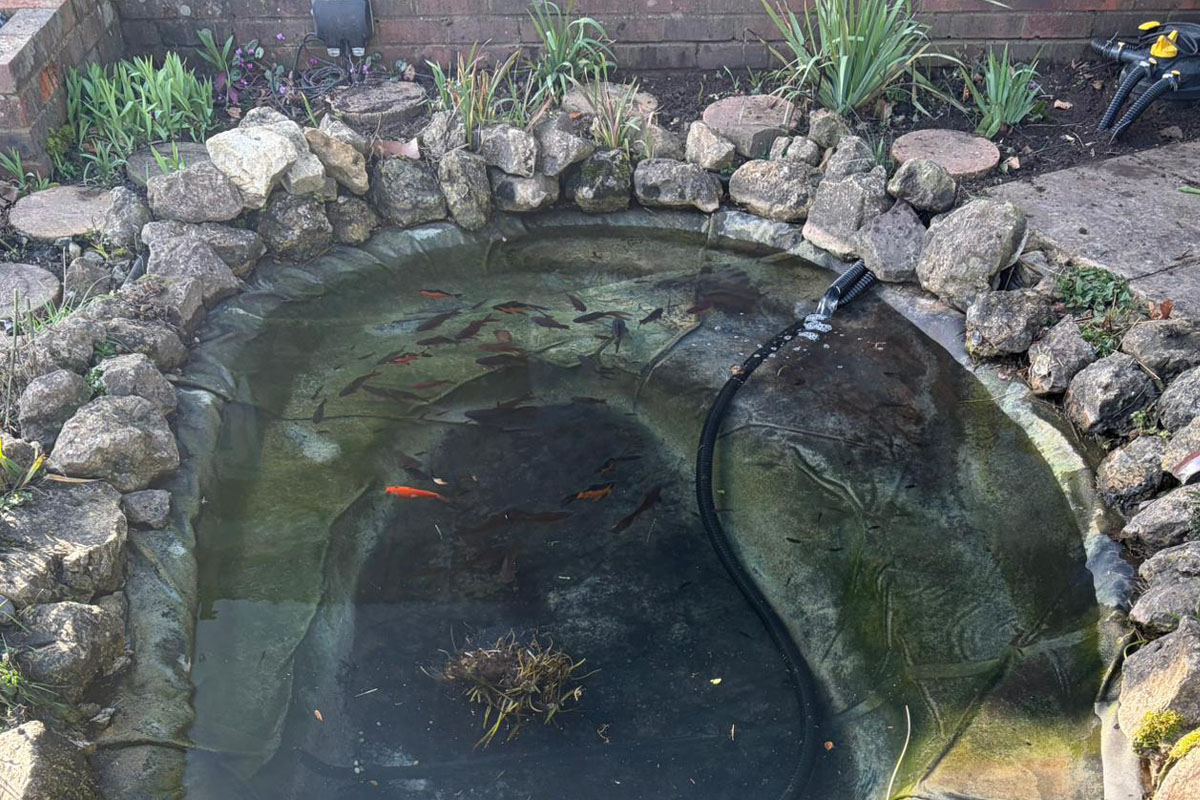
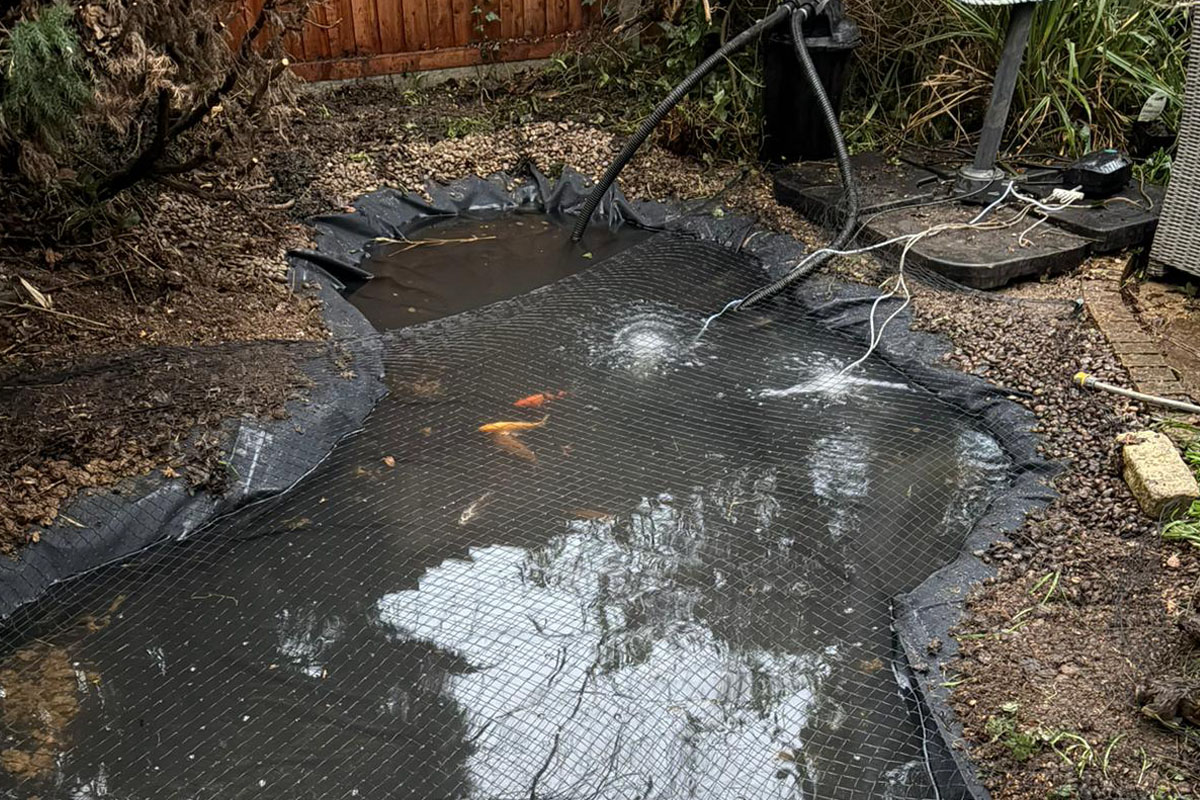
Absolutely, one of our most common requests is exactly this. We are often called out to bring existing ponds back to life where perhaps the care giver of the pond has moved house or sadly passed away leaving the family with a pond they have not had time to attend too or are unsure what to do with it. We handle full pond cleans and restorations, bringing even the greenest or most overgrown ponds back to life.
Green water is usually caused by algae.
The clarity of your pond water can be affected by several factors. Firstly, if the water is green then immediately the first thought should be is my UVC clarifier working? Perhaps the lamp needs changing which is recommended to be done annually, or another consideration is if your UVC clarifier is big enough for your pond and if so an upgrade or additional UVC clarifier may be the answer. If you do not have a UVC clarifier then getting one installed is the best solution to this problem. There are also several “green water” treatments available on the market in shops however long term a UVC clarifier is truly the best solution. Another thought is whether the water parameters are at healthy levels. If left unchecked nitrates and phosphates in the water will steadily increase which in themselves directly feed the like of algae so a simple series of water changes to bring these back down to acceptable levels can help bring the water clarity back.
Now if your pond is murky with silt suspended in the water column then the initial first thought would be the base of the pond has buildup of silt, sludge and debris so therefore does the pond need vacuuming or even does it need a full clean out. The other thing to consider is your filtration system. Does it need some attention in the form of cleaning out, changing the sponges etc. Or is it not large enough for the pond, perhaps the baby Koi you purchased last summer have now grown so much that the volume of waste they produce now compared to their smaller, younger selves are simply too much of a strain on the original filter system. Once again there are “sludge buster” and “silt remover” chemicals readily available on the market in shops but this would really be a plaster on a bullet wound and instead dealing with the route problem will bring the best and longer lasting results.
A healthy, happy Fish should be seen swimming calmly through the water upright with all their fins spread out. A common problem pond keepers meet is their Fish at the surface “gasping” for air. This is a sign of the Fish struggling with breathing. Unlike other Animals, Fish do not possess lungs instead they rely on gills for respiration/breathing. Usually, the simple act of them breathing is not very noticeable however when they are struggling them will expand their gill plates in and out and open and close their mouth almost reflecting that of “gasping”. The cause for this can be several things, firstly a lack of oxygen in the water column. If the water surface is not agitated enough the vital gas exchange of CO2 exiting the pond and oxygen entering can be affected causing a low level of oxygen. A simple fix to this is to cause surface agitation in the form of an air pump, fountain, waterfall etc. Another cause of the “gasping” can be nitrite poisoning; this is easily tested for with a simple pond water test kit. If nitrite is present this will heavily affect the Fish’s ability to absorb oxygen through their gills. A quick fix would be to carry out a series of partial water changes to bring the nitrite levels down, also adding beneficial bacteria products to your filter can aid in breaking down the nitrites. Ultimately investigating why nitrite is present in the first place is vital to avoid a recurrence.
Another cause of “gasping” can be a symptom of underlying parasite such as Gill Flukes which in severe cases can be such a strong infestation that it physically affects the gill’s ability to absorb oxygen.
This is a very common question asked by pond keepers in the UK where temperatures can reach subzero and consistently stay at low single digits for long periods of time. Firstly, with Fish being cold blooded animals their metabolism is affected by temperature so the colder it is the less they will want to feed, with exception to Sturgeon and Sterlets who will continue to feed throughout the winter periods. During the colder periods a reduction in feeding is expected often feeding only once a week and even a complete halt of feeding in the coldest temperatures.
The next thing to think about is filtration systems, although these are vital for the rest of the year to keep the water parameters in check during the colder periods of the year where water can freeze it is worth turning all pumps off. The reason for this is even running water will freeze at 0c so the last thing you want is water to freeze in your pipes and hoses which then results in excessive pressure pushing outwards causing the pipes and hoses to split ultimately leading to leaks when the water is once again running.
The last thing to consider is the oxygen levels for the Fish. If the temperature drops to 0c the water in your pond can freeze, in the deeper parts of the pond especially if dug into the ground the water is unlikely to freeze. However the surface layer will very likely freeze and if it does the vital gas exchange of oxygen entering the pond and Co2 exiting will be affected. An old school fix to this is to leave a couple of tennis balls floating in the pond so when the water does freeze you can pop the balls out leaving behind air holes. You can also break the ice but be careful as large heavy chunks of ice falling in the pond can damage the liner/walls of the pond and not to mention may hit the Fish. These days you can also purchase pond ice vents and pond heaters, these aim to produce a small area of heat that will keep the water in its immediate vicinity to not freeze.
To answer simply, YES you can top up your pond even during a hose pipe ban. Fish are covered under the Animal Welfare Act 2006, one of the five needs stated in that law is “To be housed in a suitable environment” this covers a pond being adequately filled and the water quality at appropriate parameters and if this is not the case then a water change is needed or the pond to be topped up. This also allows a full pond clean out to be taken place whether that is by the homeowner or a professional service provider.